
one thousand and one nights
“By Allah, O my father, marry me to this king, for either I will be the means of the deliverance of the daughters of the Muslims from slaughter or I will die and perish as others have perished.”
This is a fairy tale that appears happy at first glance, but is in reality unfortunate. The audience will be taken into a dynamic journey that spans across multiple tales representing Scheherazade’s troubled psyche, who is imprisoned in a room with no other pleasure but telling stories of people that she wish she were. I utilzed contrasting color and spatial organization as vehicles to to distinguish Scheherazade’s imposed reality from the worlds she imagines.
Drawing on historical architectural references, natural formations, decorative traditions, and cinematic composition, this project explores how each story can possess its own identity while remaining part of a cohesive narrative world.

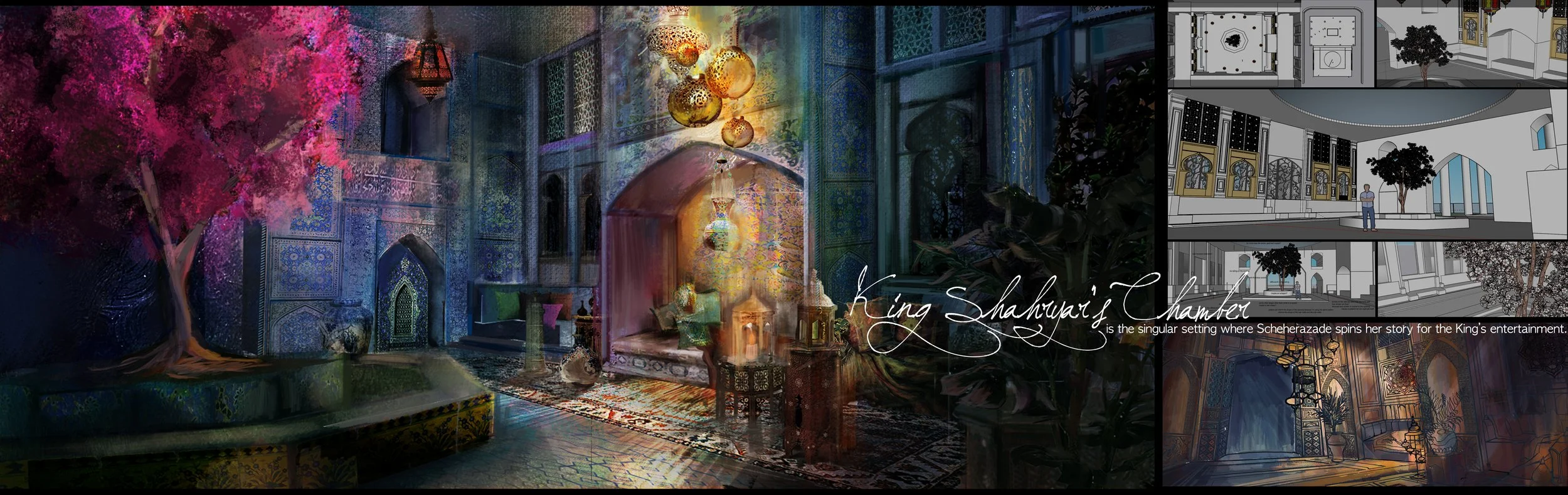



King Shahyrar’s Chamber:
Luxury as Confinement
Design Intent: Architecture as an Instrument of Power
King Shahryar's chamber is conceived as a space where luxury and oppression coexist.
Repeated arches, carefully ordered proportions, and symmetrical architectural relationships communicate the king's authority. The enclosed environment is elaborate and visually rich, yet its rigid organization reinforces Scheherazade's lack of control over her circumstances.
An indoor tree serves as a symbolic expression of the king's ability to impose his will upon nature. Its falling leaves suggest the passage of time, reflecting the urgency of Scheherazade's struggle to survive another night.
A predominantly cool palette establishes an atmosphere of calculated authority, while the tree introduces an organic focal point within the controlled architectural setting.
Repeated arches: architectural order and authority
Indoor tree: nature brought under the king's control
Falling leaves: passage of time and the threat of mortality
Cool palette: emotional distance and confinement
Spatial composition: hierarchy between the king and Scheherazade
Key Design Elements

The king’s chamber
The chamber’s cool palette and ordered architecture establish the king’s authority. Spatial studies develop the setting around the encounter between the king and Scheherazade, connecting the narrative relationship to the room’s organization.
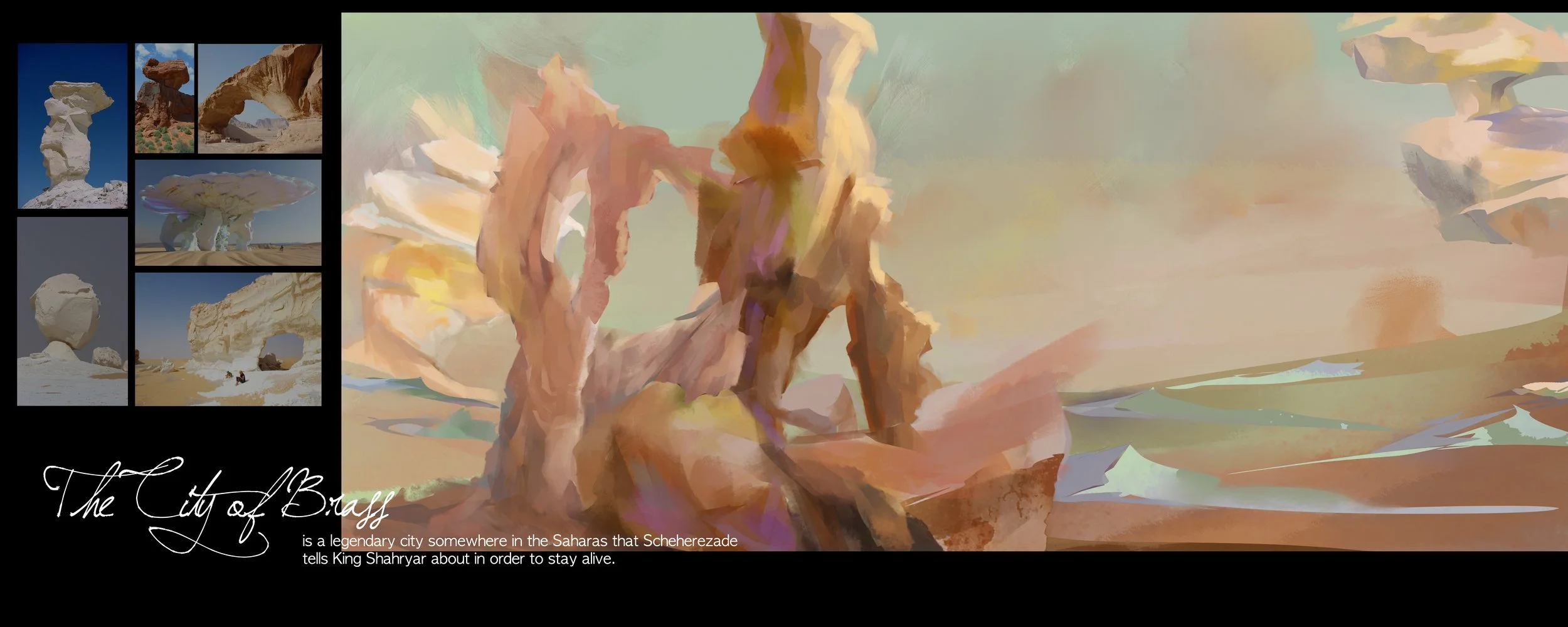
The imagined world
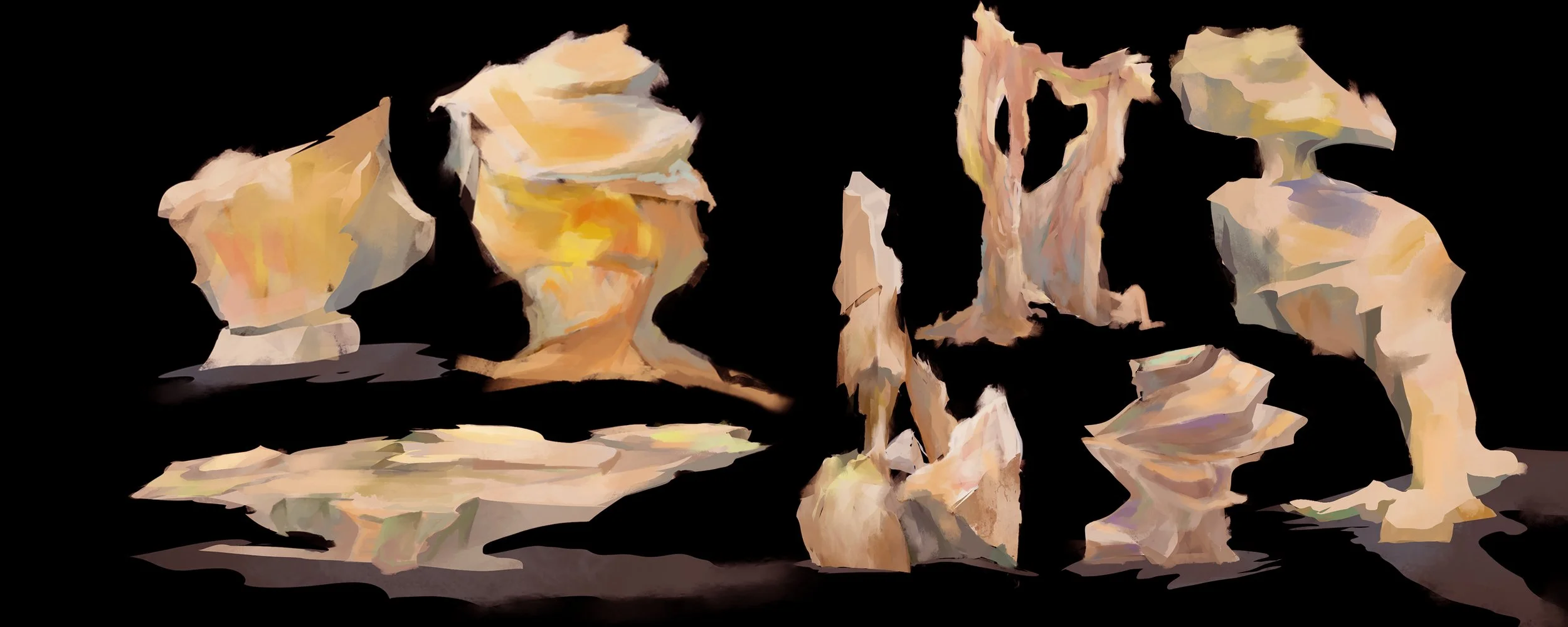
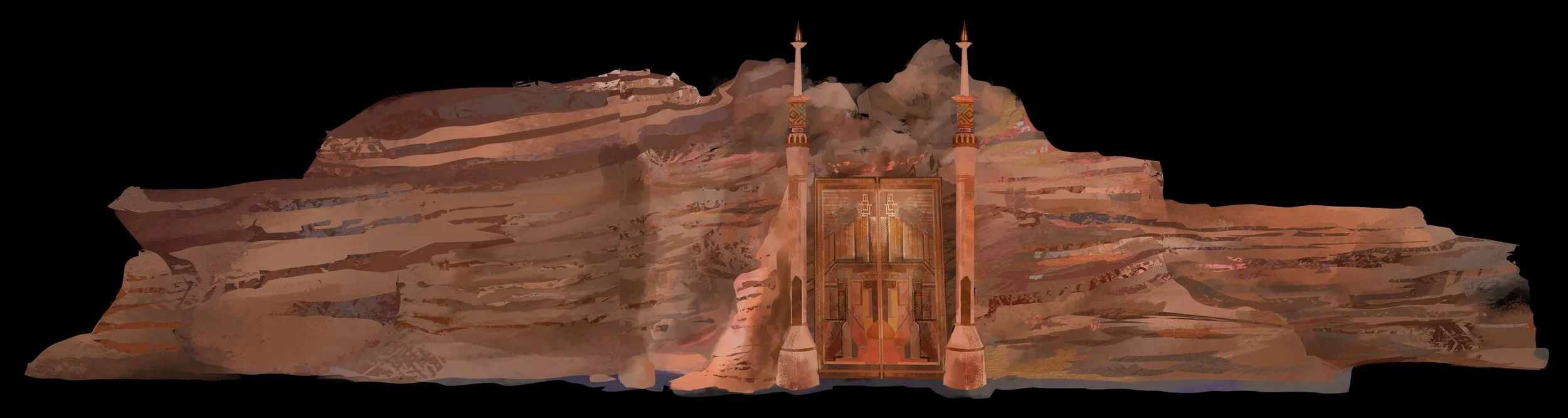
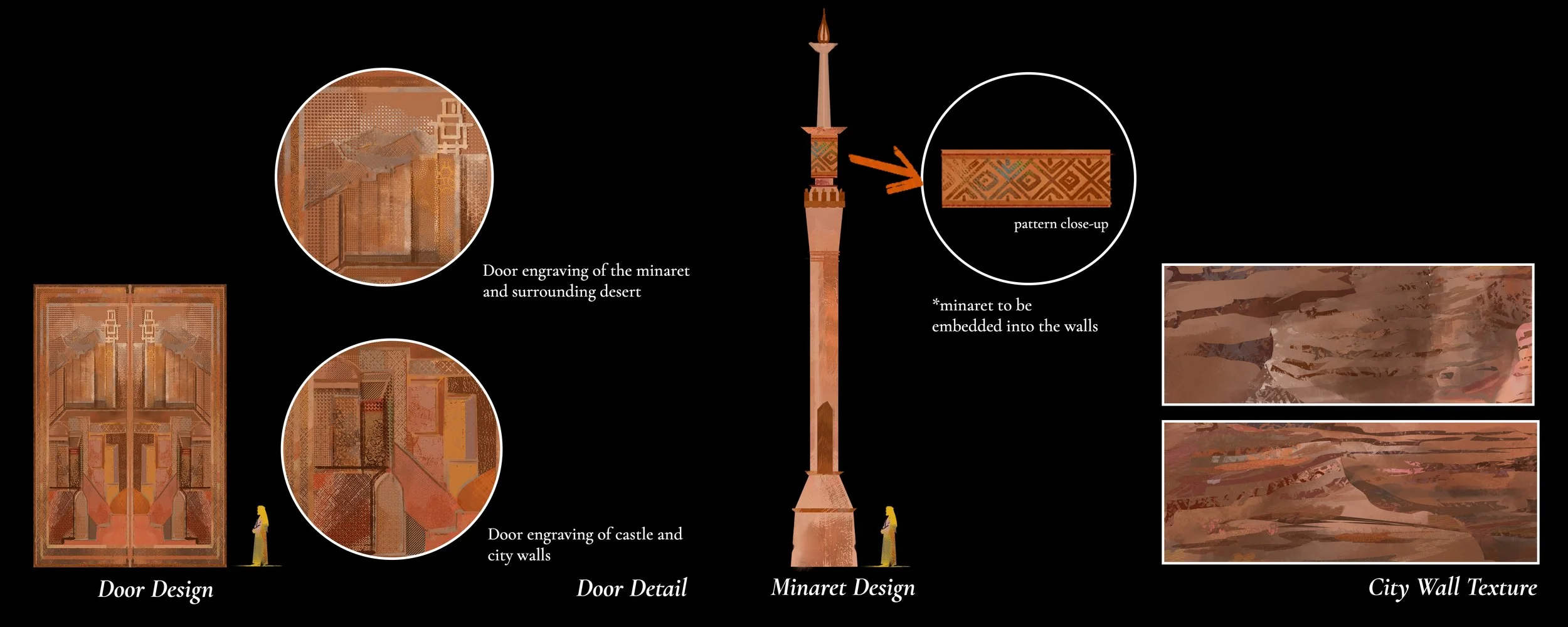
The City of Brass develops through geological references, rock silhouettes, wall elevations, and architectural details. These studies connect the environment’s large forms to its gateways, ornament, and material surfaces.
The dhow
The dhow extends the imagined world through an expansive seascape. A luminous sail against turquoise and violet water shifts the emphasis toward movement and possibility, while supporting object studies describe the vessel itself.