the pilgrimage
Cultural Preservation Through Architectural Storytelling
independent concept and environmental design / architectural development / visual storytelling
Design Question:
How can architecture communicate the importance of cultural identity in a world transformed by supernatural forces?
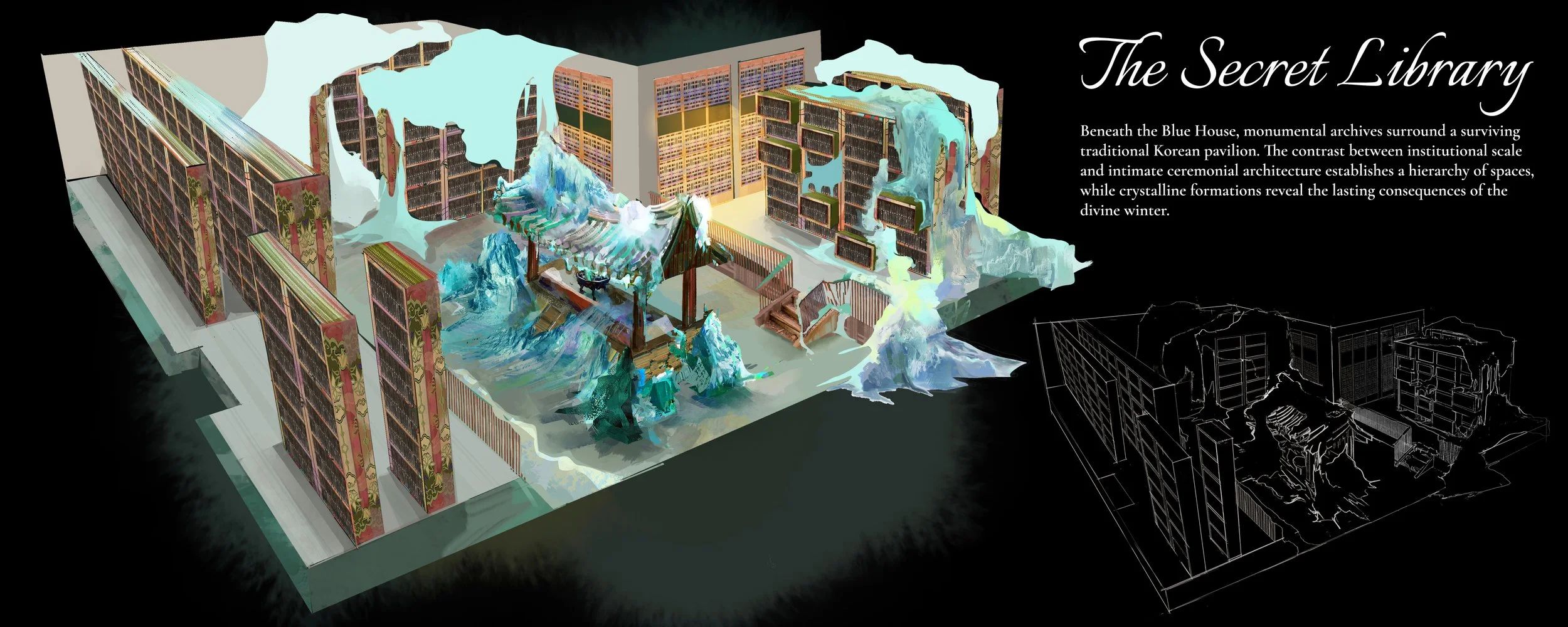

Set in Korea during an unending supernatural winter, The Pilgrimage follows a journey toward a hidden archive beneath Cheongwadae, the former presidential compound. The archive safeguards the country's cultural heritage, ancestral knowledge, and the surviving traces of a disappearing civilization.
The environment explores preservation through the relationship between monumental archives, intimate ceremonial architecture, and supernatural formations of ice. Architectural hierarchy, historical references, and spatial progression establish a setting in which cultural memory becomes central to the story.
Architecture as Cultural Hierarchy
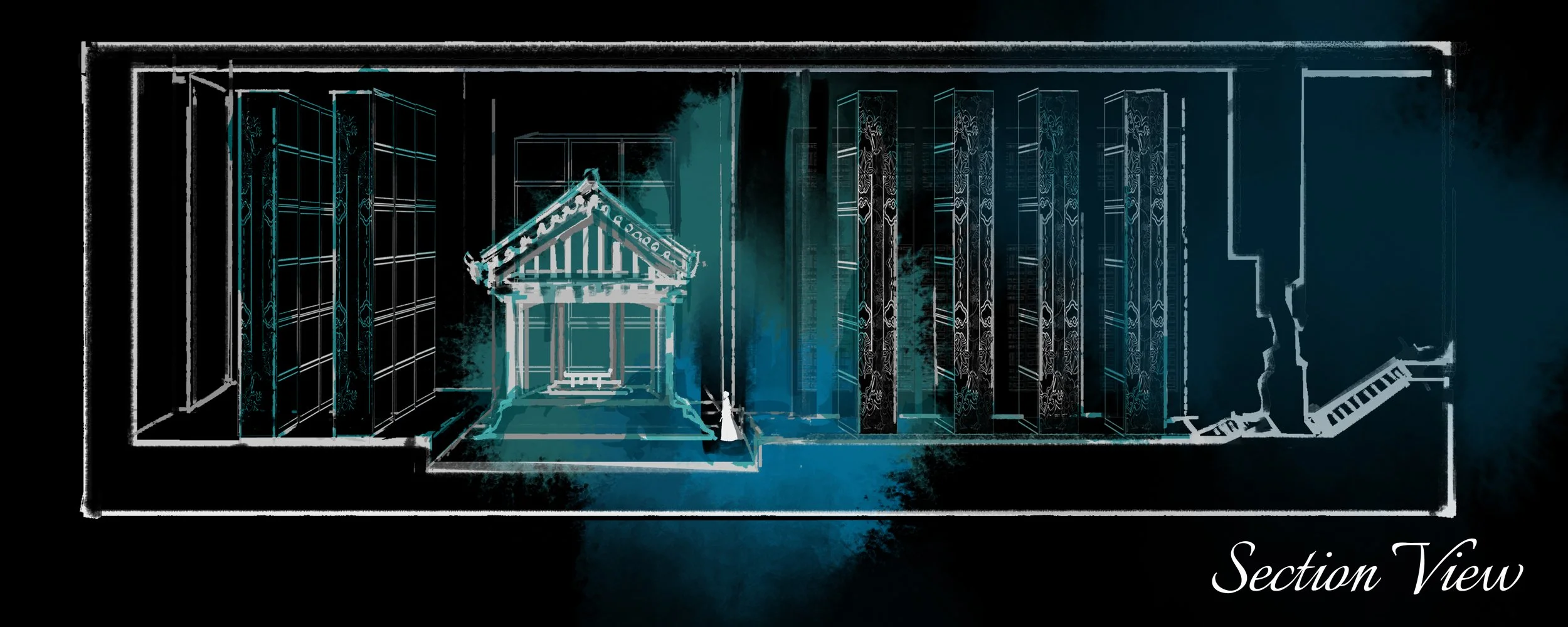
Towering archives emphasize the significance of cultural memory, while the smaller shrine establishes an intimate ceremonial destination.
The section explores a transition from overwhelming archival volumes toward the intimate shrine, moving the emotional experience from awe to discovery.
Historical Identity Within Fantasy
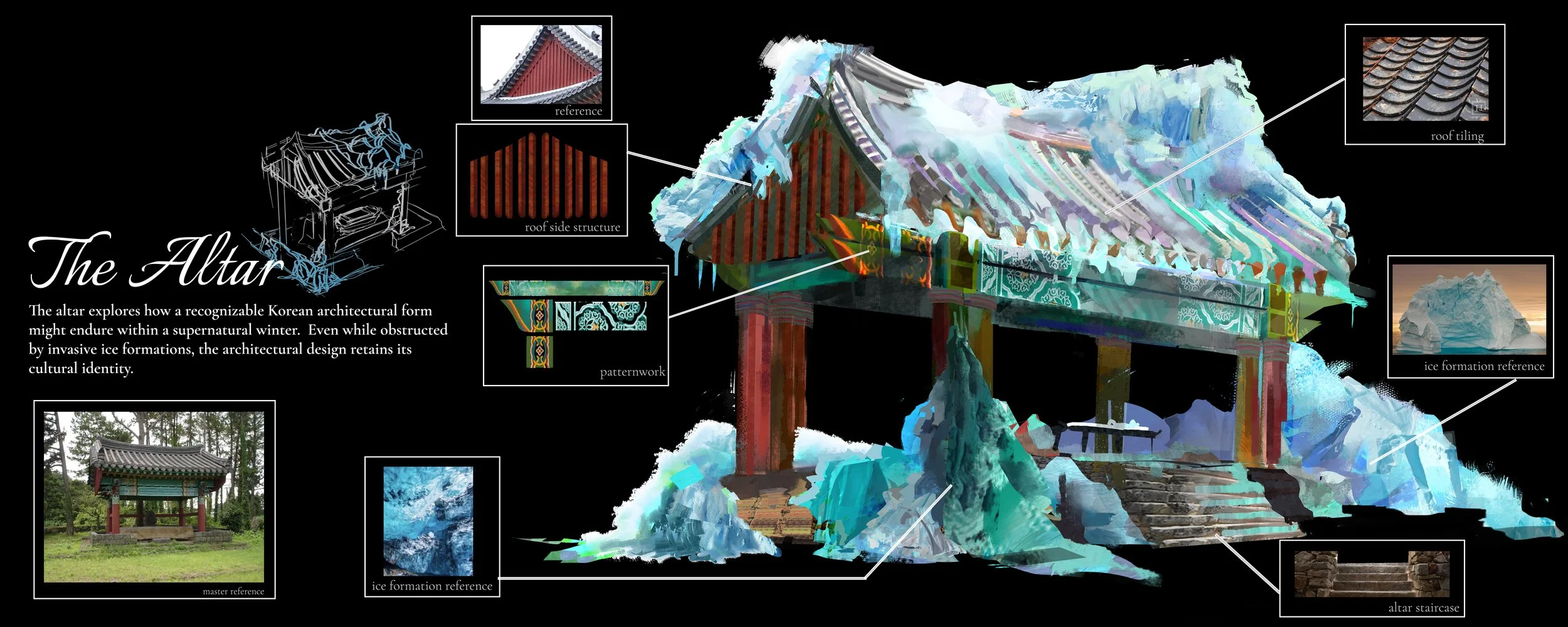
Inspired by Korean ancestral shrine architecture, recognizable roof structures and painted ornament remain visible beneath protective supernatural ice.
Functional and Ceremonial Details
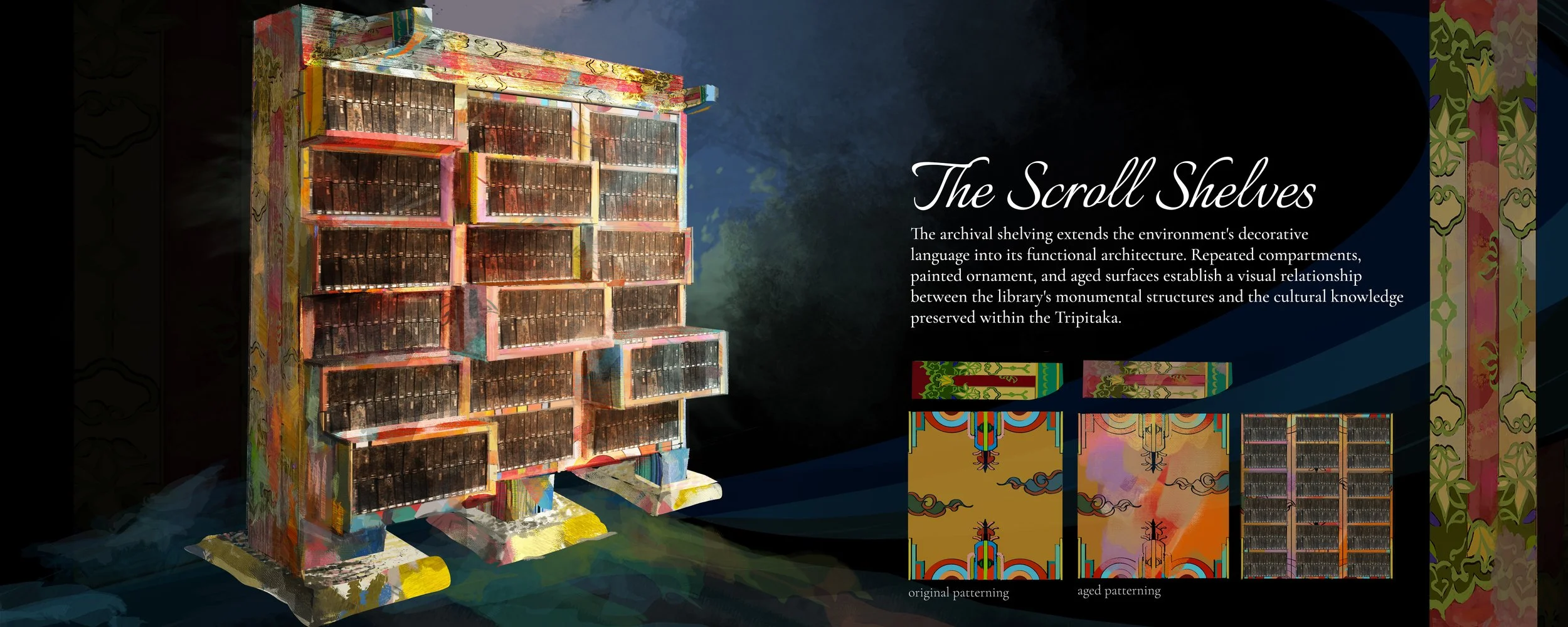
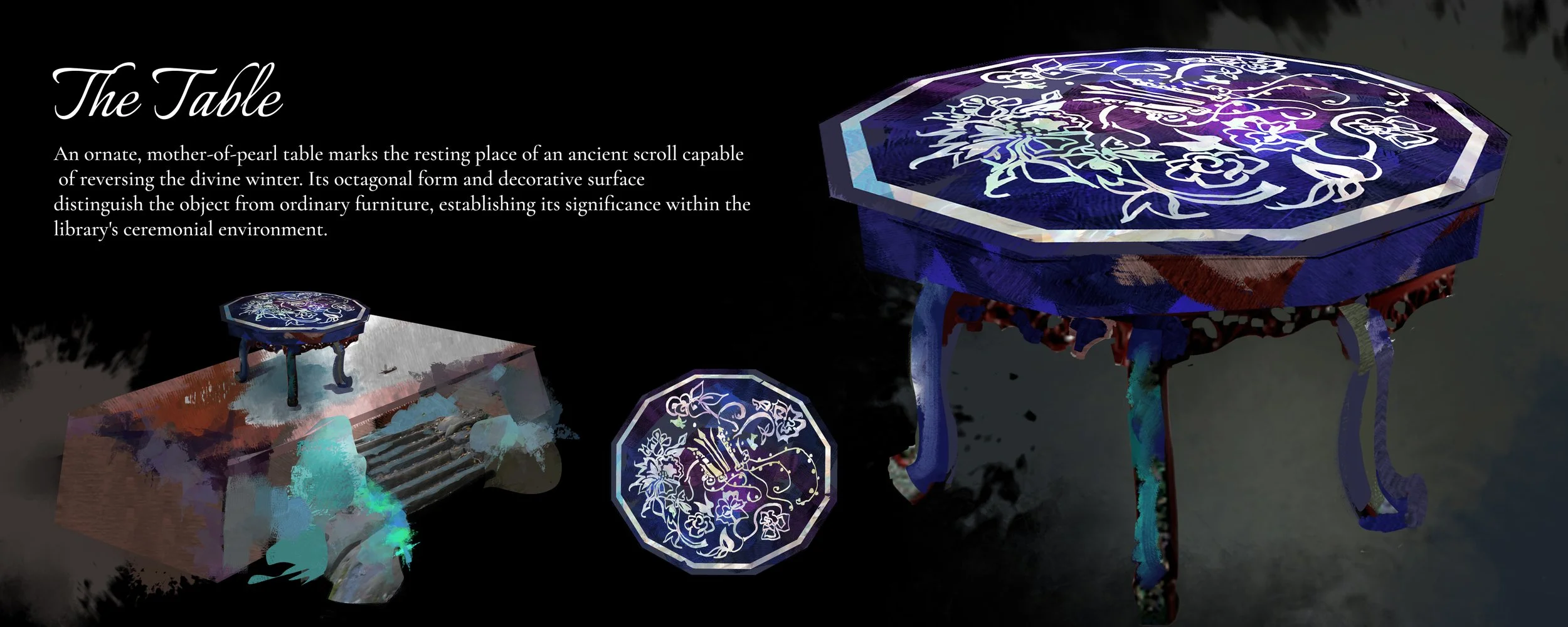
Traditional decorative motifs unify the archive's shelving with the shrine, while an ornate mother-of-pearl table distinguishes the scroll's ceremonial significance.
Color as Emotional Perspective
Luminous color contrasts with the devastation of the endless winter, expressing the protagonist's optimism rather than the literal conditions of the landscape.