barton fink
Architecture of Creative Paralysis
UCLA MFA Production Design theoretical concept /
Environment Design · Period Research · Visual Development
Design Question
How can a historically grounded environment express the psychological emptiness of writer's block?


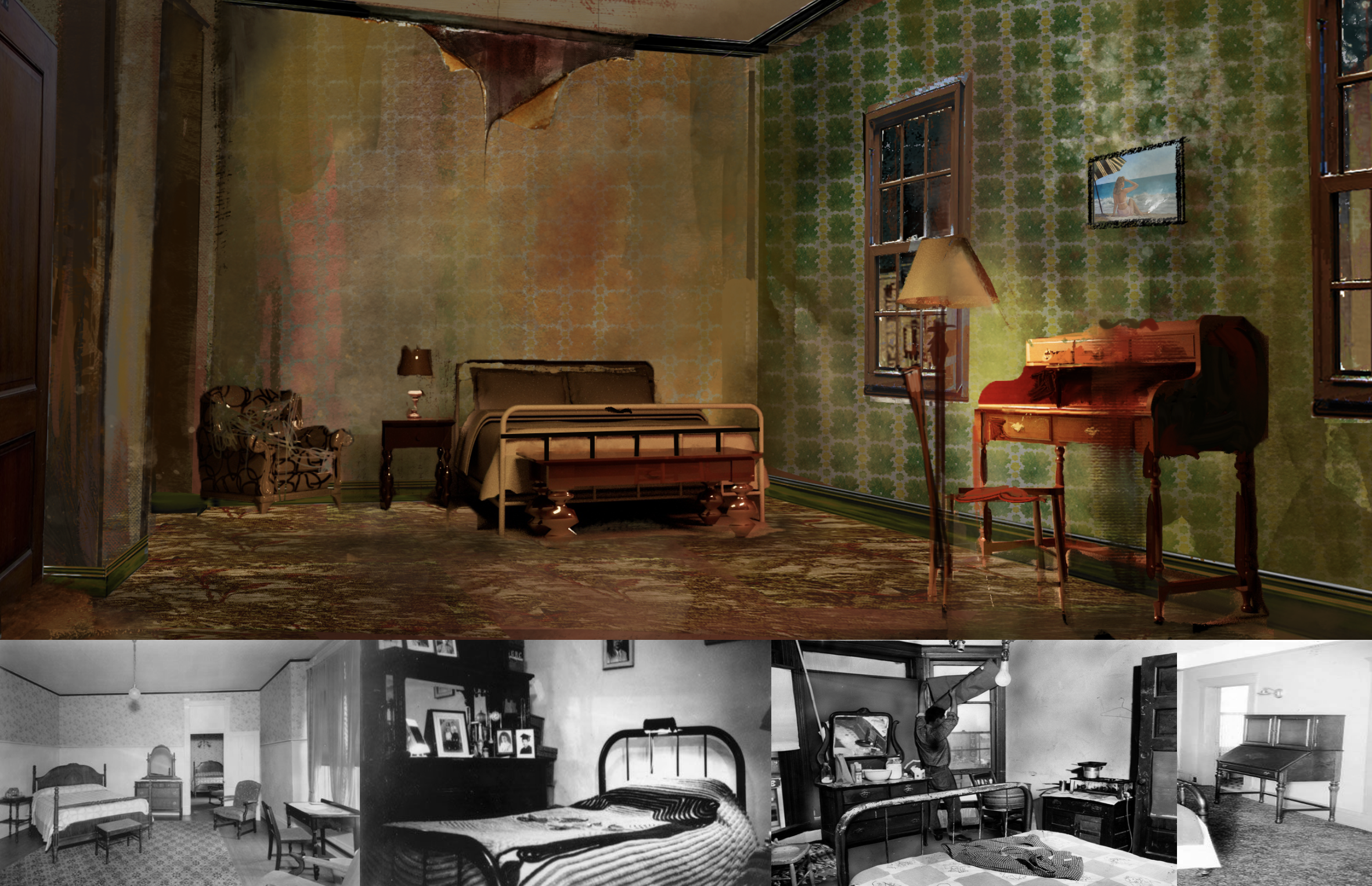


In this interpretation of Barton Fink, writer's block is conceived not simply as confinement, but as a void. The Hotel Earle translates this psychological tension into a surreal and overwhelming environment of architectural scale, repetition, and atmospheric contrast
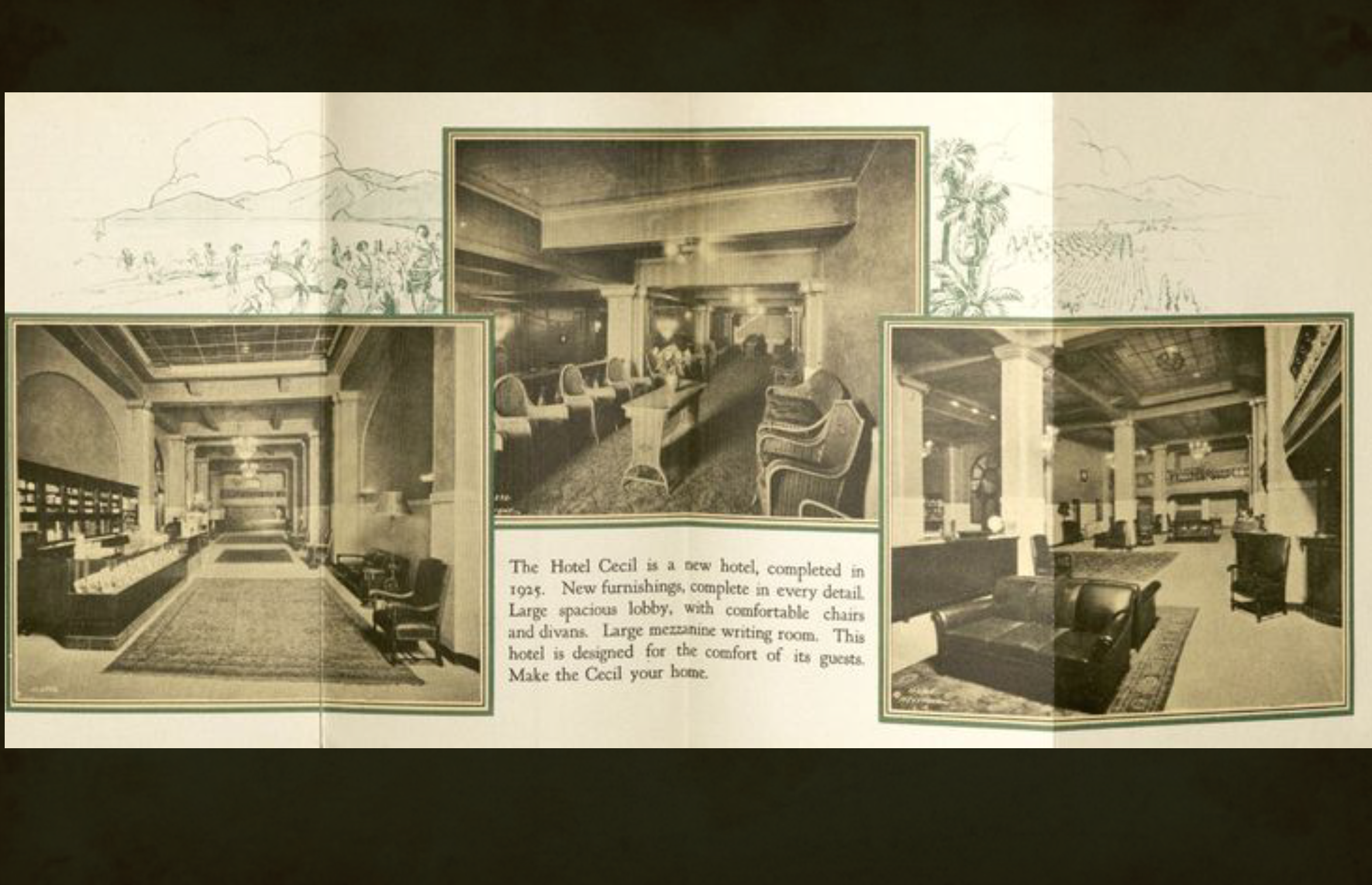
Set in 1940s Los Angeles, the Hotel Earle draws from early-twentieth-century Spanish Revival architecture. Faded grandeur, repetitive spaces, and deteriorating ornament transform a seemingly welcoming hotel into a physical expression of creative paralysis.
Relic of Former Grandeur
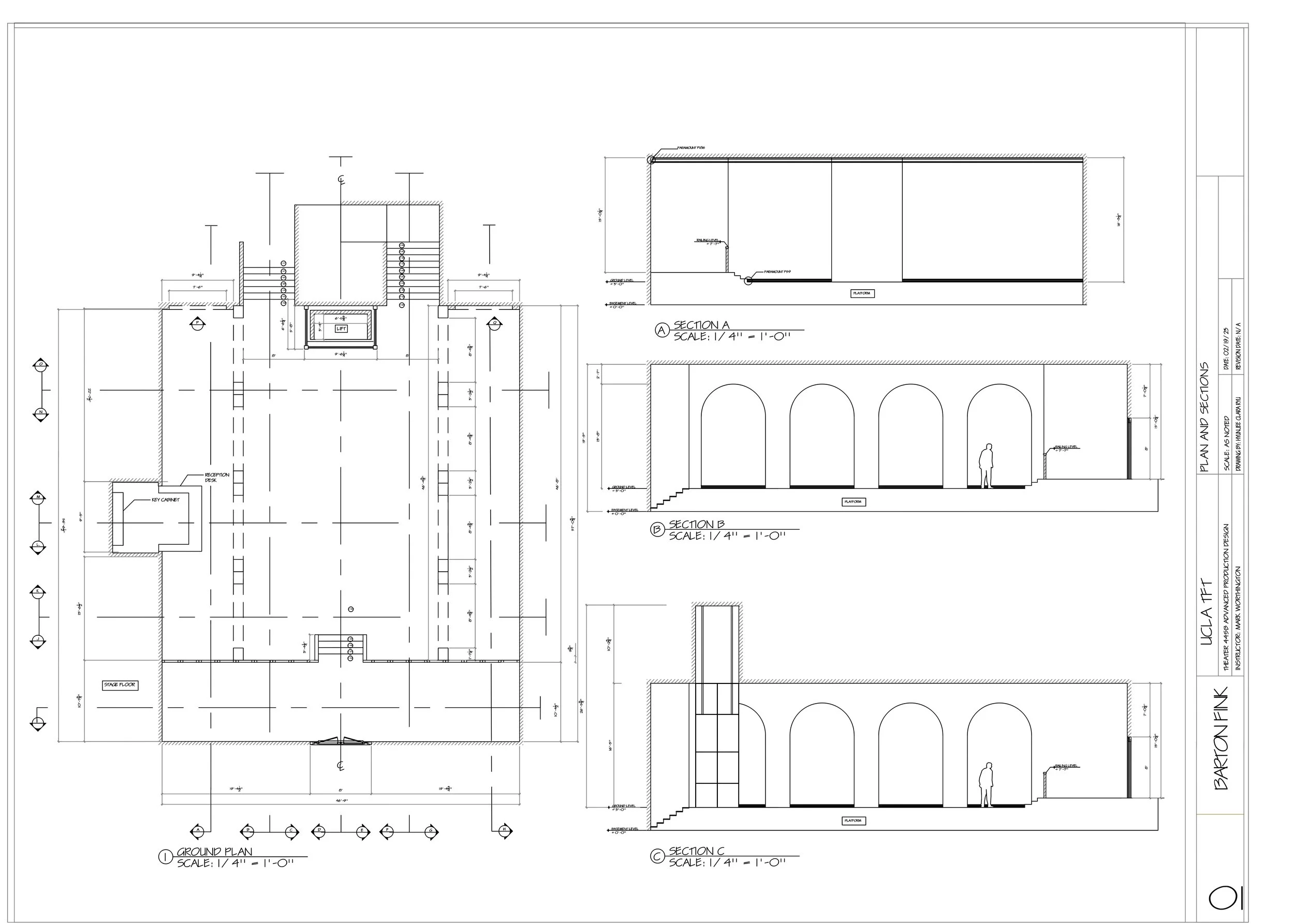
The lobby's repeated arches, monumental proportions, and warm lighting evoke the grandeur of a once-prestigious hotel. Deep shadows and aging surfaces undermine this impression, creating a space that appears open and inviting yet offers little psychological relief.






The Corridor:
Repetition and Unease
Repeated archways, doors, and patterned surfaces turn an ordinary circulation space into an unsettling experience. Restricted sightlines and deteriorating finishes reinforce a sense of enclosure, despite the corridor's apparent continuity.
Room 621:
Creative Isolation
Barton's desk becomes the focal point of his creative struggle. Sparse period furnishings, subdued lighting, and deteriorating surfaces establish an intimate but emotionally vacant environment, reflecting the paralysis of a writer unable to move forward.


Wallpaper:
Paradise in Decay
Botanical and geometric motifs evoke the hotel's former promise of comfort and escape. Their dense repetition, weathered finishes, and muted colors transform this imagined paradise into something oppressive, extending the hotel's psychological atmosphere through its decorative surfaces.
Hotel Earle:
Historical reference and exterior identity
The hotel’s exterior is not unlike its Spanish Renaissance Revival style. Closely modeled after the now demolished Fremont Hotel once located in Bunker Hill, Los Angeles.